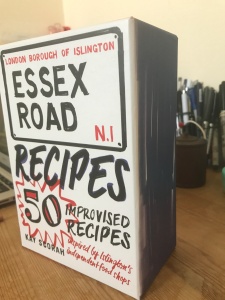

Love, death and slow roast lamb.

Huh?

Because I live 5 minutes walk from the best fishmonger, greengrocer, butcher and baker you could wish for…

(OK, 25 minutes if you add in all the pauses for chat, banter and gossip)

…I hardly ever freeze food…

(OK, 45 minutes if you add in the swift pint at the New Rose)

Nevertheless, for the last 2 weeks I’ve had a leg of lamb in the freezer. How it ended up there is a long story involving love, death and coming of age, so we’ll come back to it another day. With the promise of my lovely neighbours, Pat and Pete, coming over for Sunday lunch, it was defrosting time.  I took the lamb out of the freezer and put it in the fridge on Saturday, so that it could de-frost nice and slowly, which was exactly how I intended to cook it. Usually when I slow cook lamb I do so with plenty of liquid and cover it for the duration, but this time I decided to combine traditional English roasting with a North African flavour and it worked out really well. So here it is:

You will need:

A leg of lamb.

3 cloves of garlic – thinly sliced

2 tsp smoked paprika powder

2 tsp hot paprika powder

2 tsp sea salt

For the liquid

1 whole lemon with 4 whole cloves stuck into the skin

1 stick cinnamon

1 small red chilli

1 teaspoon whole coriander seeds

1 teaspoon whole black peppercorns

To prepare the liquid

Place the clove-stabbed lemon, cinnamon stick, chilli, coriander seeds, black peppercorns into the smallest saucepan you have. Add enough water to barely cover the lemon. Bring to the boil, cover and simmer for 20 minutes. Strain the liquid and keep it in a jug. Discard all the spices but keep the lemon and take the opportunity to use it when you cook red cabbage, which goes really well with the lamb. (In the red cabbage recipe from May, instead of using grated lemon rind, place this lemon on top of the cabbage throughout the cooking process and take it out before serving.)

Preheat the oven to 160ºC/325ºF/Gas mark 3.

To prepare the lamb:

Place the leg of lamb, fatty side up, into a roasting dish. Make lots of small incisions in the fat and insert thinly-sliced garlic. In a small bowl, mix together the 2 types of paprika with the salt and a small amount of water to make a thick paste. Spread this over the exposed surfaces of the leg of lamb.

Place this in the oven for about 30 minutes. Then, carefully pour about 1 cup of the lemony, spicy liquid over the meat. You don’t want to wash the marinade off, so make sure that you take it easy. Return the meat to the oven for another 2 hours, every 30 minutes adding a little more liquid to keep the top moist. Take it out of the oven, cover with foil and leave to stand for about 20 minutes before carving and serving.
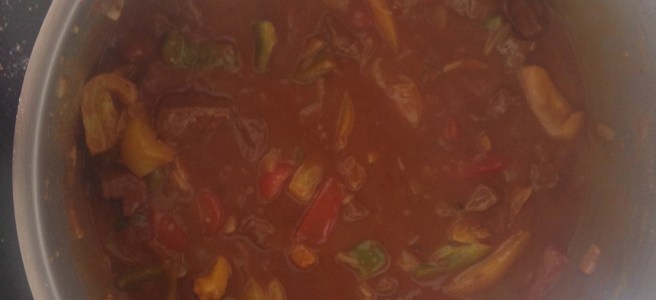
In my day, we only had green peppers for our goulash. . .

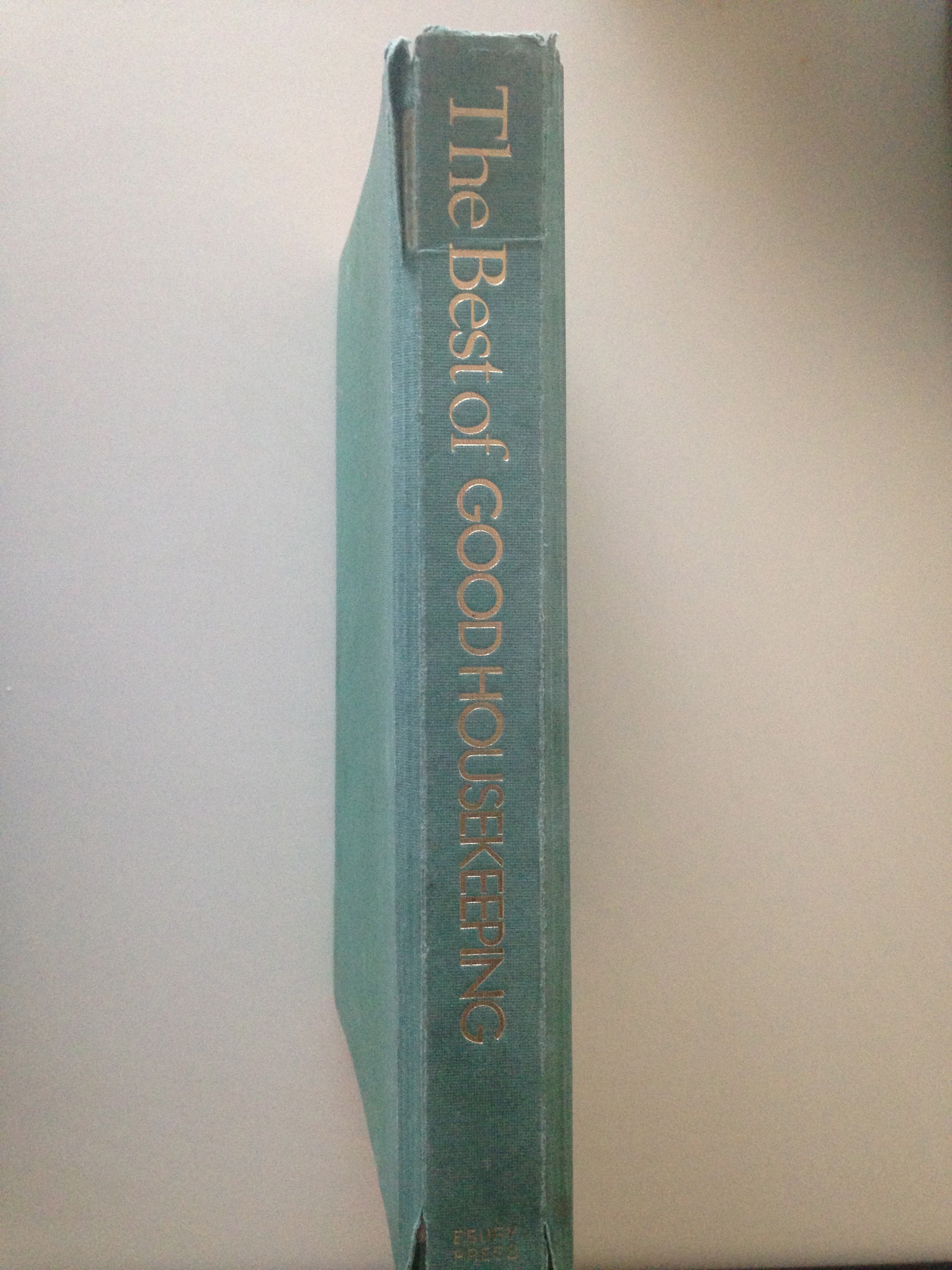
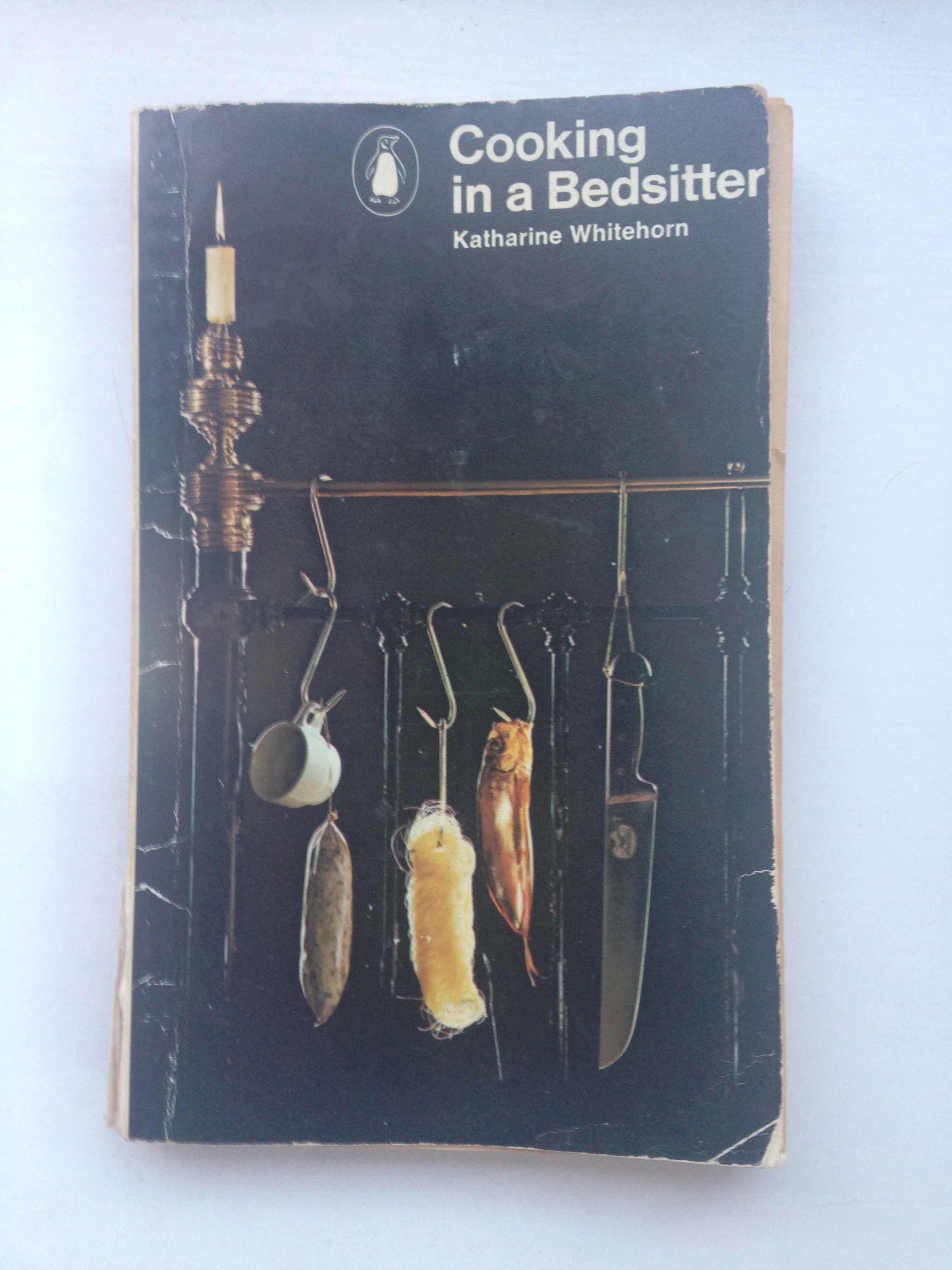
I moved to London from t’North in 1972, and shortly after that found myself renting, for £7 a week, an attic room off the bathroom of a house in Ashburnham Road, SW10. My housemates were 3 of the poshest people I had ever met and, even though I was barely house-trained, tolerated my drunken debauchery with almost unfailing good humour. Thanks to them and a nearby Italian deli, I discovered “foreign food”, and started to cook. It was around this time that I acquired my first 2 cookery books. I can’t say that I bought them, because the inscription inside the front cover suggests that I nicked Katherine Whitehorn’s depressingly titled “Cooking in a Bedsitter” from someone named Peter. The Best of Good Housekeeping was a gift from an optimistic and soon to be dumped boyfriend, who may also have been Peter, I can’t remember.

The cover photo on my copy of “Cooking in a Bedsitter” – looks like Sweeney Todd’s kitchen.
IMG_2170
The Best of Good Housekeeping, which has a section quaintly titled “foreign dishes”.


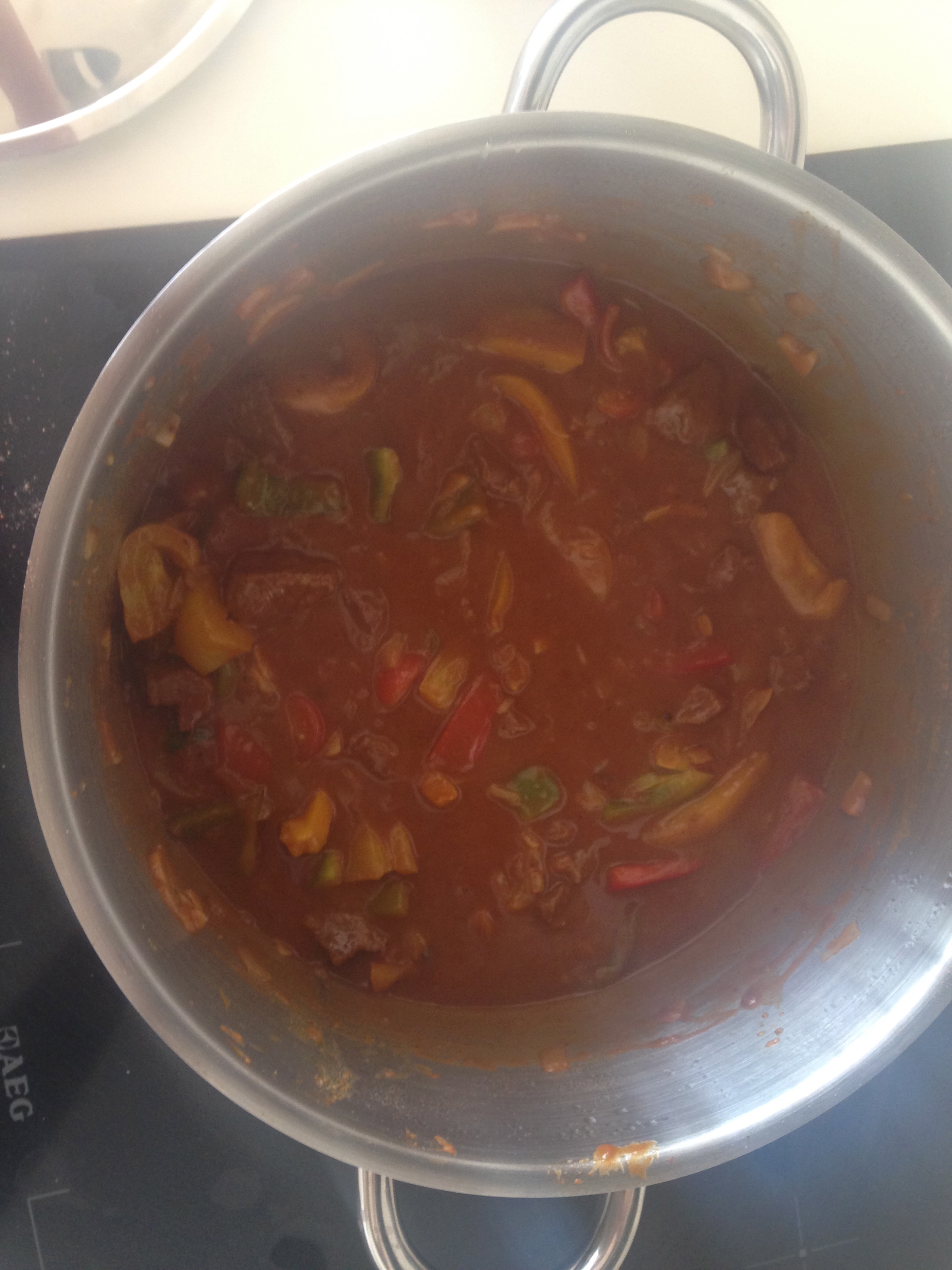
While “Cooking in a Bedsitter” is much more famous, and is written with some wit and style, the recipes are, on the whole, disgusting. The title of the first section, “Cooking to Stay Alive” sums it up, really.  I only hang on to it in case “Peter” tracks me down and asks for his book back. However, I still refer to Good Housekeeping from time to time, and the goulash recipe here is loosely based on theirs. Back in the 70s of course *red and yellow peppers had not been invented, so we only used the green variety, and garlic was only used to repel vampires.

You will need:

700 g stewing steak cubed

3 tbsp plain flour

1 tbsp smoked paprika

1 tbsp hot paprika

small amount of freshly grated nutmeg (about a third of a clove)

large pinch of salt and 2 tsp freshly ground black pepper

2 medium onions finely chopped

4 cloves garlic finely chopped

1 red, 1 green and 1 yellow pepper seeds removed, sliced.

2 tbsp tomato puree mixed with about 100 ml water

75 ml beer

handful of parsley finely chopped

2 tbsp sour cream (optional)

You also need a very large saucepan with a well fitting lid.

Place the flour, paprika, nutmeg, salt and pepper in a large resealable plastic food storage bag and add the beef. Shake it around until every piece of beef is coated with the flour/paprika mix.

Cover the bottom of the saucepan with cooking oil and fry the onions and garlic rapidly for a couple of minutes then turn down the heat, cover and sweat them for about 5 more minutes.

Add more oil, turn up the heat again and add the meat in about 3 batches, moving it around so that it seals. Add more oil of its getting sticky.

Once you’ve browned all the meat, add the beer, tomato puree + water and sliced peppers.

Stir it all around and, if it seems a little dry, add a bit of water. Don’t add too much water at this stage because the peppers will release some while they’re cooking. Turn down the heat to a very low simmer and cook for about an hour. Stir it every 10 minutes or so, and check that it isn’t sticking. If its too thick, add a little water.

After 45 minutes, taste a piece of meat with the liquid to check that it is tender and add more salt and pepper if needed. Add the chopped parsley and cook uncovered for the last 15 minutes. Stir in the sour cream, if you’re going to use it, just before serving .

* You didn’t really believe that, did you?goulash

On the dangers of dancing while cooking…

My ancient iPod, left to its own devices on shuffle, decided to have a total punkfest.

“Know your Rights”, “No More Heroes.” “Down in the Tube Station at Midnight” “Pretty Vacant” As a result I found myself  *pogo-ing (is that a word?) while slicing.

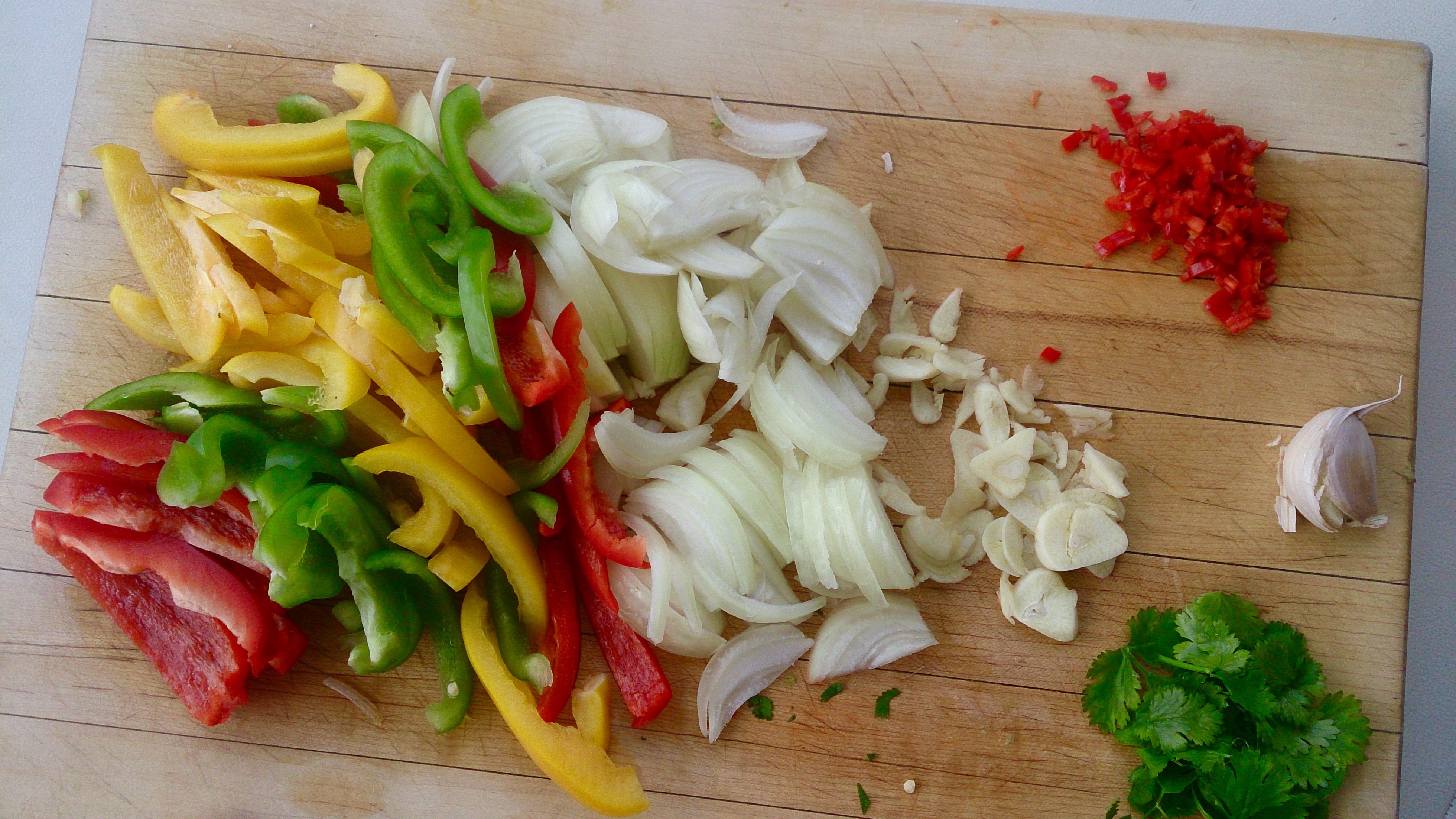
I came this close to slicing off all my fingers. Perhaps an appropriate fate for someone cooking swordfish.Chopping Board

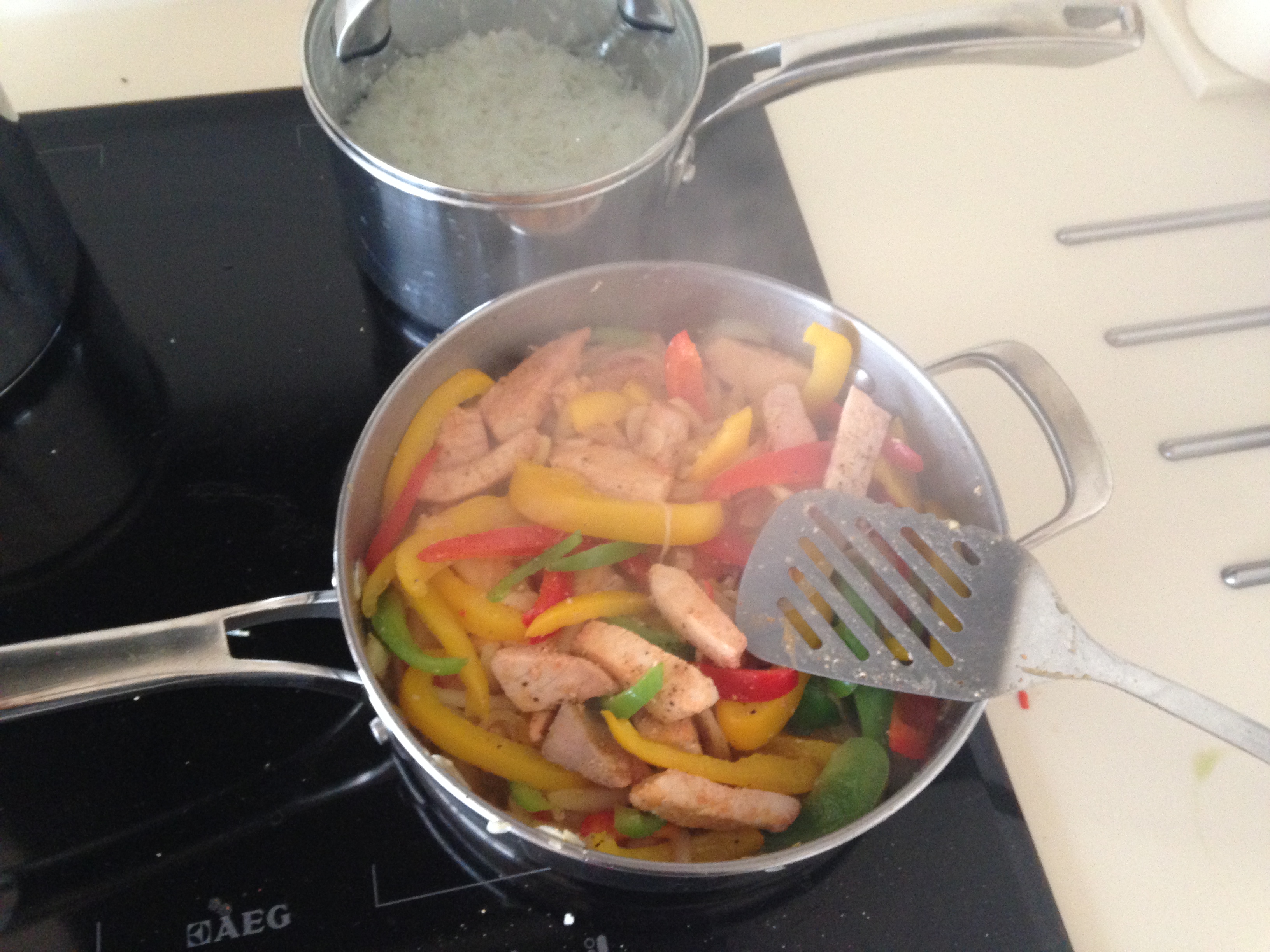
It’s been a colourful week in so many ways (nice work on marriage equality, USA), not least in The Market Garden, so I was inspired to make fajitas with the juicy swordfish steaks from Steve Hatt the fishmonger, along with side dishes of re-fried beans and guacamole.

You can use any kind of meaty fish such as tuna, salmon or monkfish in this recipe, or, indeed you can use meaty meat; chicken breasts, lean beef, pork fillet.almost there....

I prefer to serve this with rice and corn tortillas, but corn tortillas can be hard to find in London. The flour version are OK. The gluten free tortillas are, in  my view, disgusting. You’re better off without any kind of wrap.

The recipes are quite long, so I’ve put them in .pdfs below.

I love inventing and writing recipes. I love my neighbourhood. But please remember that this this is NOT about my recipes. It’s about YOU supporting YOUR local businesses, YOU creating YOUR recipes, YOU chatting to YOUR neighbours as you stand in line in the greengrocers, the butchers, the fishmonger..

*Pogo, as in the dance, not the stick

swordfishFajitas

legendaryguacamole

refriedbeans

mangotomatosalsa

Life is just……

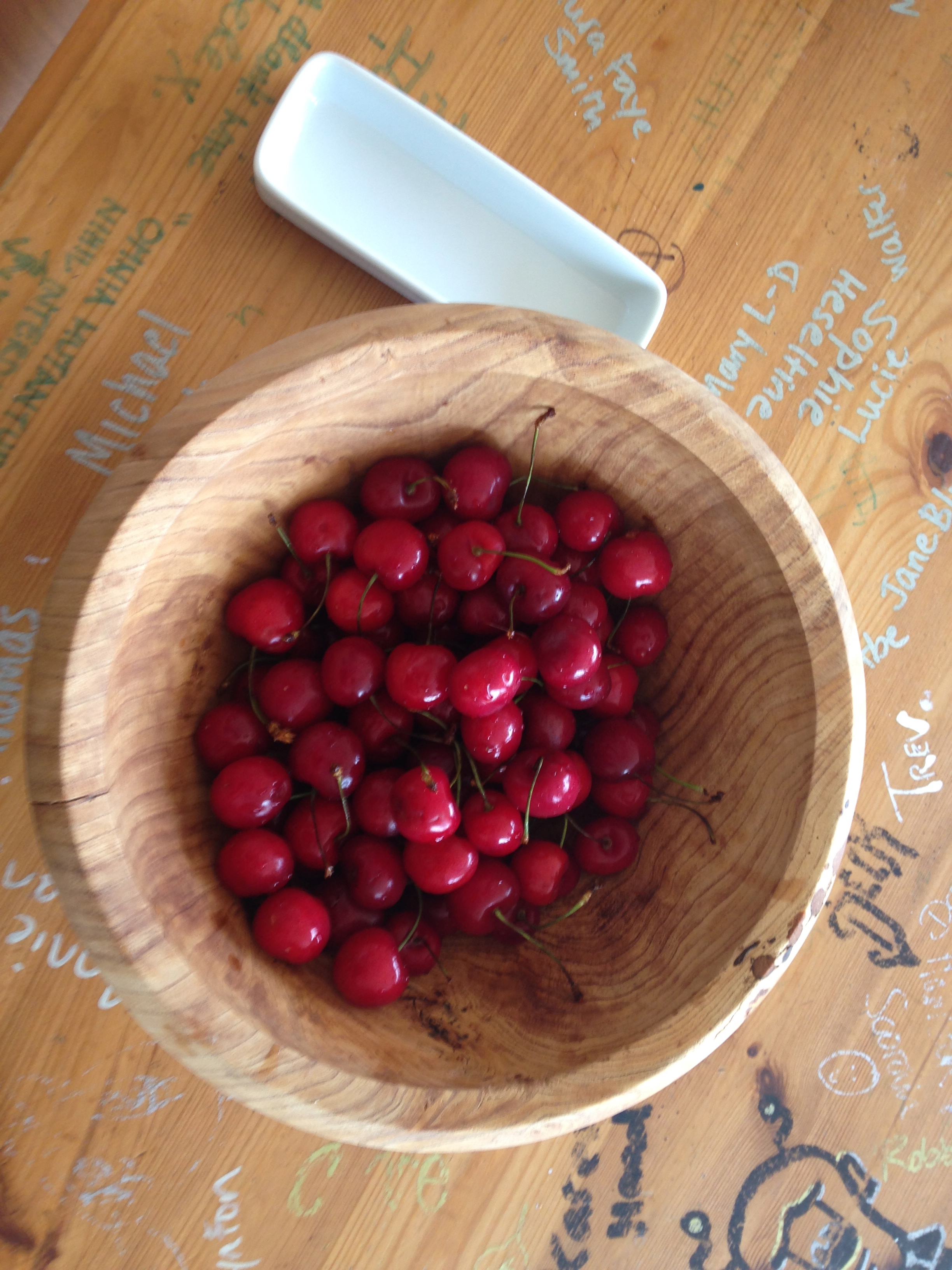
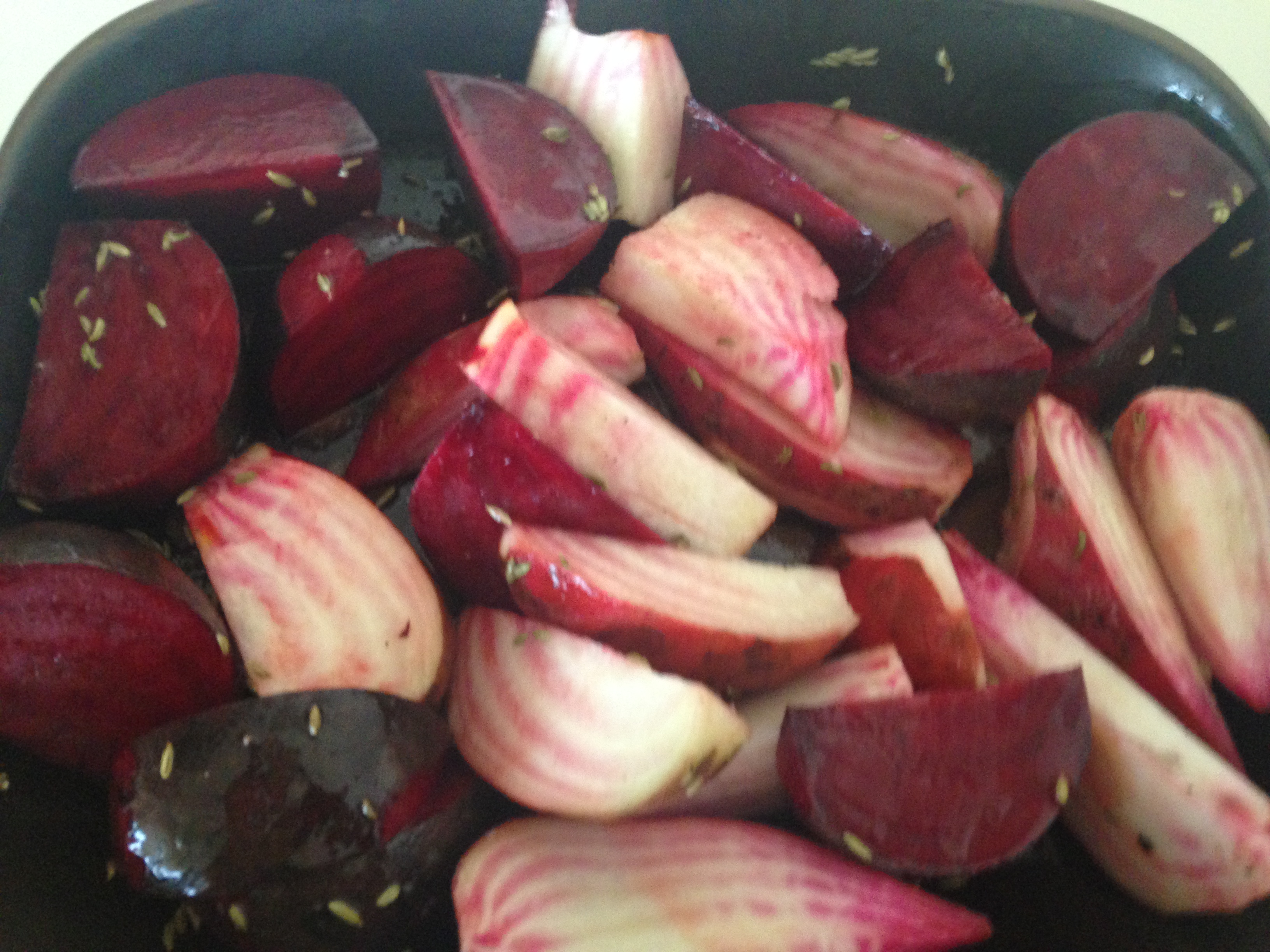
a bowl of cherriesFor some reason I’ve been noticing red everywhere, including at the bottom of the fridge whence 2 beetroots had been staring at me in an accusatory manner for a few days. It’s not often I buy vegetables that I’m not going to use immediately, but somehow I’d been seduced by their promise and then had an imagination by-pass when I got them home. Then, Friday evening, walking up towards Highbury, I suddenly had a vision of a roast beetroot and pinto bean salad. For no reason. Welcome to the inside of my head. And then, Saturday morning, I saw some of their pale cousins in the Market Garden – perfect.

Beetroots ready to roast. Beetroot – ready to roast.

Here we go. Preheat your oven to 180C/350F/Gas Mark 4.

You will need:

200 g pinto beans soaked overnight and then boiled for about 45 mins to an hour. Keep topping up the water.

4 large beetroots, I used 2 dark and 2 pale, well scrubbed and cut into about 6 pieces per beetroot.

2 teaspoons of fennel seeds – coarsely crushed in a pestle and mortar

salt and pepper.

olive oil

about 25g mixed coarsely chopped macadamia nuts (or hazelnuts) and pine nuts

2 garlic cloves,chopped finely .

A small handful of chopped coriander leaf.

Dressing:

1 tbsp balsamic vinegar

3 tbsp hazelnut oil

1 tbsp olive oil. salt and pepper. 1 crushed clove of garlic.

Into your roasting dish, pour enough oil to cover the bottom thinly. Into this, mix the fennel seeds, plenty of salt and pepper. Heat the oil for about 5 minutes in the oven, then add the sliced beetroots. Turn and slide them around until they are coated with seasoned oil and fennel seeds. Roast them in the oven for about 30 minutes. Then add the nuts and garlic and roast for another 15 minutes, until you can easily slide a knife into the beetroot slices. Remove from the oven and let them cool. Chop the beetroot into smaller pieces, add the cooked beans and coriander leaf and mix well. Shake all the dressing ingredients together vigorously in a screw top jar and then pour over the beans and beetroot. You can serve it straight from the roasting dish to save washing up, or if you’re feeling posh, transfer it to a bowl. (After all, one’s staff will be handling the clearing up, won’t they?)

We served this at a barbecue chez BBQ King John with chicken, pork steaks, sausages as well as a green salad.

Next, the caulicolli/broccoflower or whatever this is:

because somewhere between cauliflower and  broccoli lies caucolli.
because somewhere between cauliflower and broccoli lies caulicolli.

Because everything HAS to be red this week, I braised it whole in fresh tomato sauce. The verdict was that it needed a little more flavour so I’ve jazzed up the recipe a little here:

You will need:

A saucepan just big enough to take the whole whatever-it’s-called.

1 Caulicolli/broccoflower or Romanescu broccoli. Take off the tough outer leaves and the end of the stalk. Make a deep, cross-shaped cut in the stalk with a knife.

4 large tomatoes – blanched peeled and chopped. Try to chop them in a large bowl so that the juice doesn’t run off all over the place.

1/2 an onion very finely chopped.

2 garlic cloves likewise.

a pinch of sugar.

plenty of salt and pepper.

2 teaspoons of dried oregano and a handful of fresh basil leaves. Preferably red basil. Because it’s Seeing Red Week.

In your saucepan, heat some oil and fry the chopped onion for a couple of minutes. Add the garlic, dried oregano and tomatoes with their juice. Cook on a high heat for a couple of minutes. Then add the fresh basil, pinch of sugar and plenty of salt and pepper. Simmer this for about 10 minutes stirring frequently.

Place the caulicolli in the sauce, stem down. Put a tight lid on the pan and simmer for 20 minutes. Test by stabbing the poor vegetable with a sharp knife, the knife should cut through it fairly easily. If not simmer for a little longer but no longer than 30 minutes. Cut into 4 portions and serve with the tomato sauce spooned over it.

This is a good side dish for the delicious lamb shanks (cook super slowly) and lamb chops (barbecue) that they have in James Elliott at the moment. Or, for the vegetarians, serve with pasta or baked potatoes.

P.S. Buy cherries! Eat cherries! They’re not with us for long and they are, allegedly, very good for preventing and easing the symptoms of gout. And they’re red. Unless they’re yellow.

When you accidentally invite 12 people to bank holiday Monday lunch…

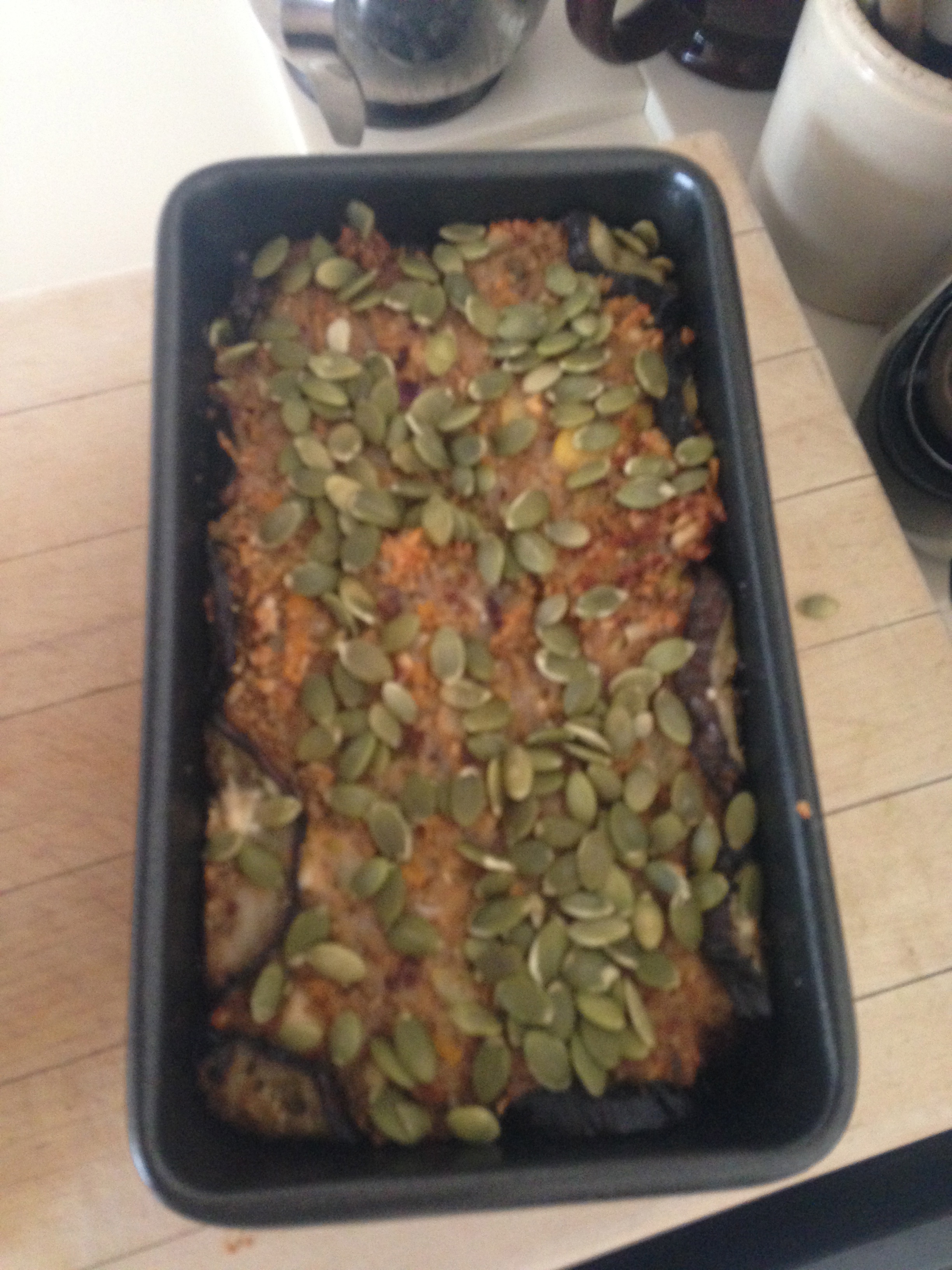
..and then remember that you only have 10 chairs, and anyway the table only seats 8… and you buy a huge piece of beef in James Elliott and then remember that 2 of them are vegetarians… and then you find out that another 2 don’t eat beef…so you also make an aubergine nut roast with a redcurrant sauce…Redcurrant sauceaubergine nut roast

…… and you’ve made the Yorkshire pudding mix the day before, just like your mum taught you, but then you find out that 2 of them are gluten intolerant….so you buy a load more spuds because thank goodness the Market Garden was open on Sunday… and then someone’s car breaks down so they’re going to be an hour late which is fine ‘cos everyone else is tucking into snacks and wine …the kids are getting hungry and the adults are getting drunk.. and because of this you find that 1 person voted Tory…but it’s OK cos everyone loves old Paul Simon songs…and no-one seems to mind eating their lunch off the top of a wooden box while sitting on the sofa ….. and then 6 hours later they’ve all gone and there’s a lot of empty bottles and every knife, fork, glass and plate in the place has been used… and they all said the food was delicious and didn’t we all have the most marvelous time….

and that’s why I do it.

THE MENU

If you click on the title you’ll get the recipes for most of these.

Barbecued English asparagus, yellow and green courgettes. You don’t need a recipe for this, you just grill the asparagus whole and the courgettes (sliced lengthways) for a few minutes on each side with a little drizzle of olive oil and some salt and pepper.

Roast beef with Pancetta

Aubergine wrapped nut roast with redcurrant sauce

Roast carrots, potatoes and parsnips with cracked coriander seed. (This recipe card includes other veg as well)

Spicy roast butternut squash and sweet potatoes. Similar to the above, but grind up 2 garlic cloves, 2 red chillis, 2 teaspoons of coriander seed, 2 tsp cumin seed, 2 tsp of black pepper and 1 tsp sea salt in a pestle and mortar, and then mix with oil and smear over the sliced squash and sweet potato before you put them in the oven. These veg take a little less time than the parsnips and carrots. 40 minutes should do it.

Leeks braised with Leek Sauce aka “Leeks squared”

Braised Spiced Red Cabbage (Because we had vegetarians in our midst I left out the bacon in this recipe.)

Jersey royal new potatoes

Everyday salad

Chicken Mint Curry

Turns out that there’s at least one other Kay in Islington. Who knew?! And thanks to her and someone named Paul L on Streetlife I decided to do some research and experiment with mint curry. English mint is abundant at the moment, and if you don’t have any in a window box or garden, the Market Garden has plenty.

The experiment turned out rather well, even if I say so myself. (Actually, Bruno, Sean and David also said so).  It takes quite a lot of prep so if you’re looking for a quick meal, this is not for you. But if you’re looking for an afternoon in the company of the lovely smells and colours of mint, coriander and spices, here you go….

INGREDIENTS FOR 4 PEOPLE

For the mint paste

Bunch of mint. (If you’re picking your own, a “bunch” is about 10 stalks.)

1/2 bunch of coriander leaf

1 small onion chopped very finely

4 garlic cloves

4 small green chillis (less if you don’t like things too spicy)

juice 1/2 lime

The rest:

1 tsp garam masala

1/2 tsp ground coriander

1/2 tsp ground cumin

1/2 tsp turmeric powder

about 3 cm piece of ginger root; peeled and grated

4 chicken breasts on the bone (chicken fillets cook faster, but are not as tasty).

4 medium tomatoes; blanched, peeled and chopped.

2 cloves

3 bay leaves

1/2 teaspoon salt

Vegetable oil (I used a pale olive oil).

What to do, roughly speaking:

Fry the finely chopped onion in a little oil on a high heat for about 5 minutes. Keep it moving but let it get really well cooked and slightly caramelised.

Chop the herbs roughly, and the garlic and chilli finely.

Whizz all of this in a blender with the lime juice until it’s well mixed but not completely liquified.  If its too dry to work with, add a little water.

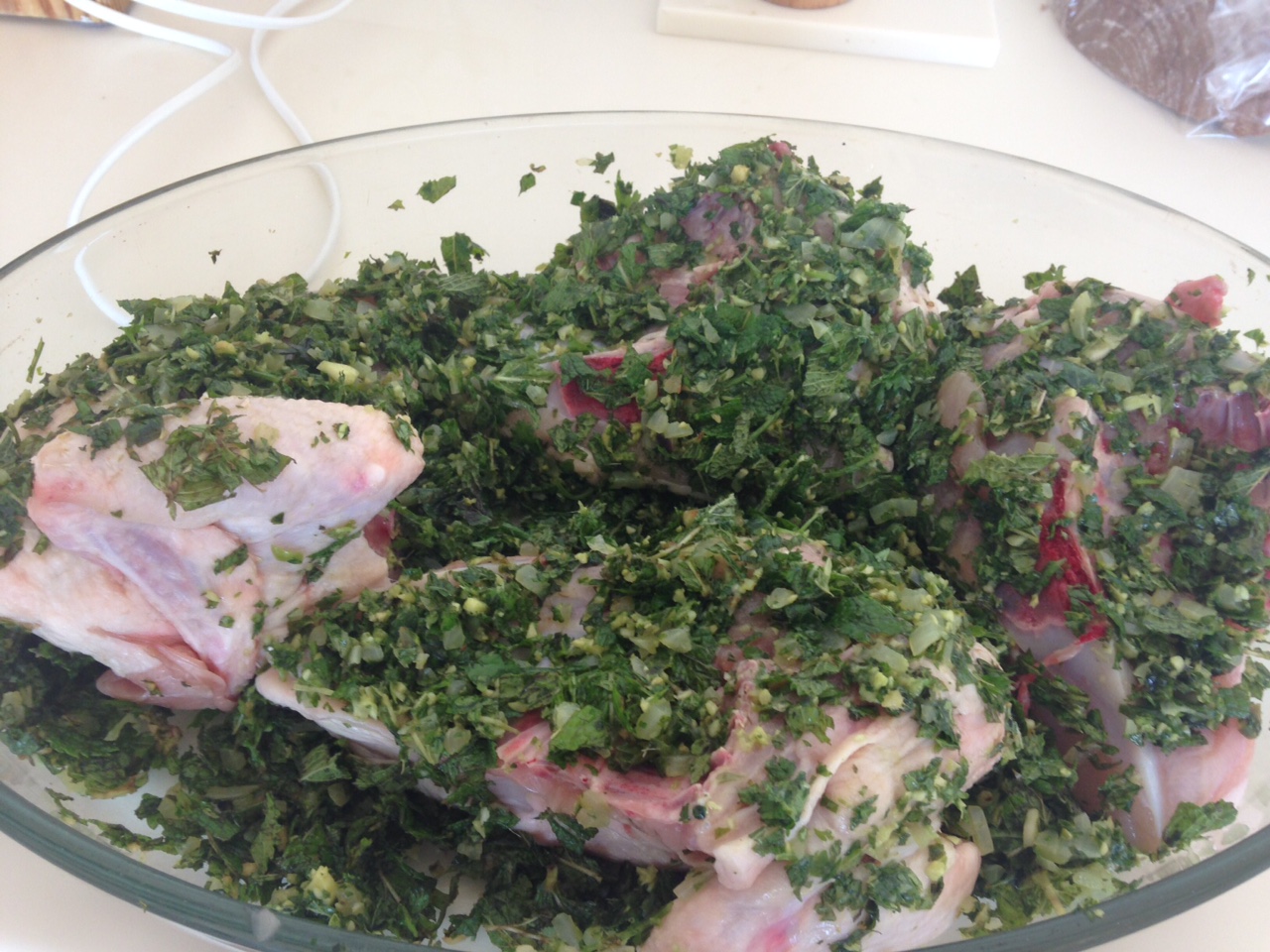
Cover the chicken breasts in this herb mix in a shallow bowl and leave for about 20 minutes. (see pic).

Raw chicken pieces coated in herb paste

Mix the powdered spices (garam masala, cumin, coriander, turmeric) with a little water in a small bowl. In a large saucepan, heat some more vegetable oil and fry the spice paste until most of the liquid has evaporated. Then add the ginger root and chicken pieces and seal the chicken, turning the pieces so that all sides are slightly browned. You may need to add some more oil.

Scrape any remaining mint paste out of the bowl and add it to the pan. Add the chopped tomatoes, cloves, bayleaves and salt. If the tomatoes are not very juicy, add a little water. Bring to the boil, put the lid on the pan and simmer for about 40-50 minutes. Check that the chicken is cooked by stabbing it at the fleshiest part with a knife, ease the flesh open and make sure that it’s white all the way through. (For a quicker cooking time use filleted chicken breasts – not so tasty, though). Taste the sauce and add more salt if needed.

Before you serve (with rice) take out the bayleaves and cloves if you can find them. If you can’t find them, warn your guests. OR, don’t warn them, and watch to see the expression on the face of the first person to bite into a clove.

There are good green and yellow courgettes as well as mooli in The Market Garden this week, so along with the rice you could also serve this with Essex Road Recipe No 10 which is here; Potato, courgette and mooli curry

Baked whole sea trout.

Anadromous is my new favourite word. It describes fish that have both salt and freshwater life stages. I’m going to start using it for people who have holiday homes by the sea.

The reason that the sea trout are so much bigger than their freshwater cousins is simply that there’s much more food available to them at sea than there is in the rivers. (On reflection, that human analogy may get me into trouble….) The fish that I bought and cooked yesterday could easily have served 6 people.

In my view wild sea trout, and in fact all wild fish have a much better taste and texture than the farmed varieties because they seem to have less fat (sometimes you can see the fat on farmed fish, and you can certainly taste it, even if you’re not aware of it.) They also have naturally higher levels of Omega 3s, although it is possible to manipulate the Omega 3 levels in farmed fish by adjusting their diet.

What to do, roughly speaking:

Steve Hatt cleaned the sea trout for me, so it took me just a couple of minutes to prepare it. It weighed about 2 kilos so I cooked it for an hour. A smaller fish will take less time.

Preheat your oven to 240C/475F/Gas9.

Line a large roasting dish with cooking foil. Drizzle a little olive oil onto the foil, and sprinkle a generous teaspoon of sea salt over the oil.

Put the whole fish onto the foil.

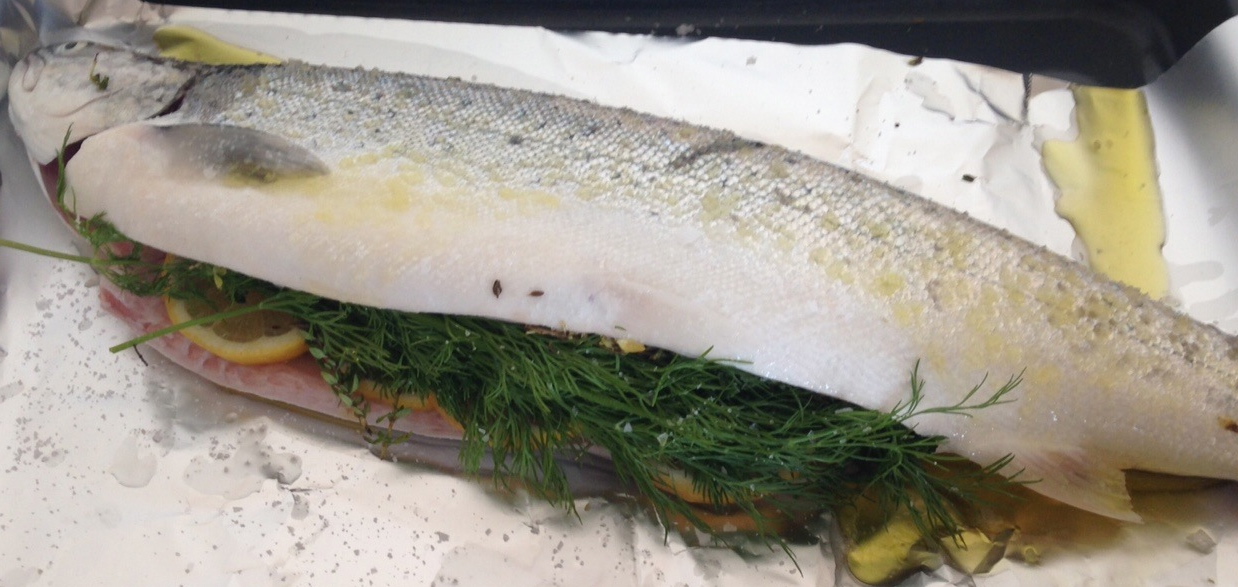
Place a sliced lemon, a bunch of lemon thyme and a bunch of dill inside the fish. Drizzle olive oil over the top and sprinkle with another teaspoon of sea salt.

sea trout with lemon, lemon thyme and dill

Seal the foil loosely around the fish so that there is air inside the foil parcel.

Place this in the oven for 15 minutes, then turn it down to 200C/400F/Gas7 for a further 30 to 45 minutes depending on the size of the fish.

Cyprus new potatoes are here and go very well with this, as does English asparagus – also in season.

Sweet potato patacones with spicy tomato salsa.

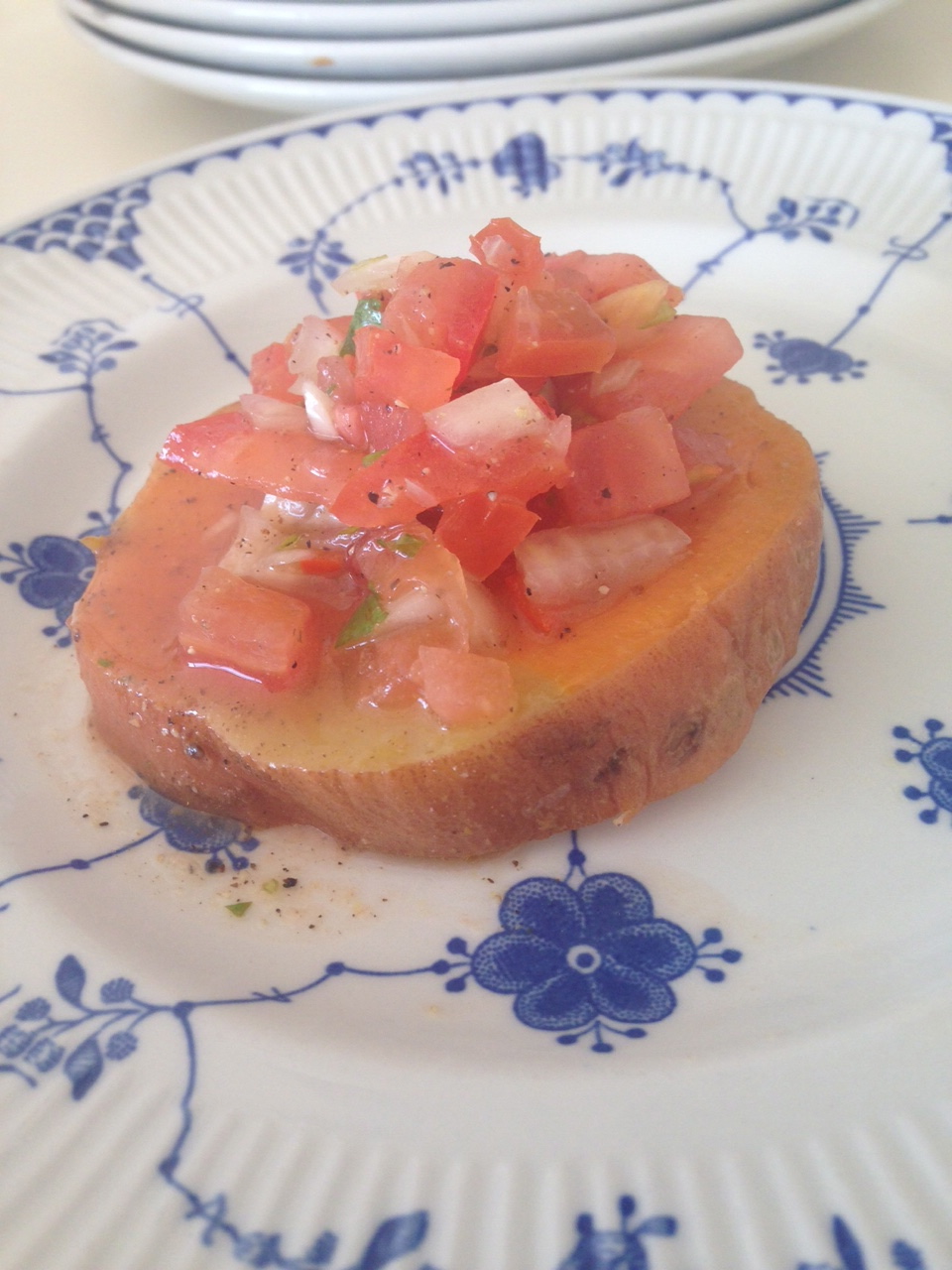
IMG_1950Patacones are usually made with fried green plantain. They’re Latin America’s answer to  bruschetta, but made with veg instead of bread. I tried to anglicise them recently using turnip, which wasn’t exactly a disaster but you’ll notice that I didn’t write it up. However, this version with sweet potato and tomato salsa works a treat. There are huge sweet potatoes in The Market Garden at the moment which are perfect, and they also have very large beef tomatoes which are a good flavour for the salsa. If you decide to use the more traditional green plantain instead of sweet potato, make sure that you flatten and dry the slices thoroughly between the boiling and the frying stage. Serve them as a starter or a snack.

For 4 people:

2 large sweet potatoes scrubbed well and cut into rounds about 2 cm thick. Discard the pointy ends of the potatoes.

The salsa:

1 very large beef tomato or 2 medium ones.

half a medium onion

2 cloves garlic

1 small red chilli

handful of chopped coriander leaf

juice of half a lime

salt and pepper

Boil the sweet potato slices in water for about 7 minutes. They should still be quite firm. Remove them with a fish slice and place them in a single layer on kitchen paper or a clean teatowel. Place kitchen paper on top of them and pat them dry, pressing quite firmly as you do so. Leave them on the paper or cloth to dry out even more while you make the salsa.

Chop all the salsa ingredients very, very finely and put them in a bowl. Squeeze the lime juice over this and mix it all up. Add salt and freshly ground black pepper to taste. Leave to stand for a few minutes as you return to the sweet potatoes….

Heat a generous amount of olive oil or corn oil in a large frying pan until it’s smoking. The bottom of the pan should be completely covered with oil. Turn the heat down very slightly and fry the sweet potato slices for about 4 minutes on each side. You might need to fry them in batches and top up the oil between batches. Turn them gently with your fish slice because you want them to stay intact. It’s fine to caramelise the edges a little. (In fact, someone around here thinks they taste even better that way, so I tried to pretend it wasn’t a mistake).

Lift the fried slices out of the pan, drain off any excess oil (or place them briefly on kitchen paper to absorb the excess oil) then transfer to plates and pile salsa on the top. 2 or 3 slices per person is a good amount for a side dish or starter.

You can also serve them with Legendary Guacamole which was Essex Road Recipe card number 30 and is here:

Legendary Guacamole

Swordfish Steak with Passion Fruit, Chilli and Lime Salsa.

I’ve seen more passion fruit in the Market Garden this year than in previous years, I don’t know what has caused this flood, but let’s make the most of it. . . IMG_1918

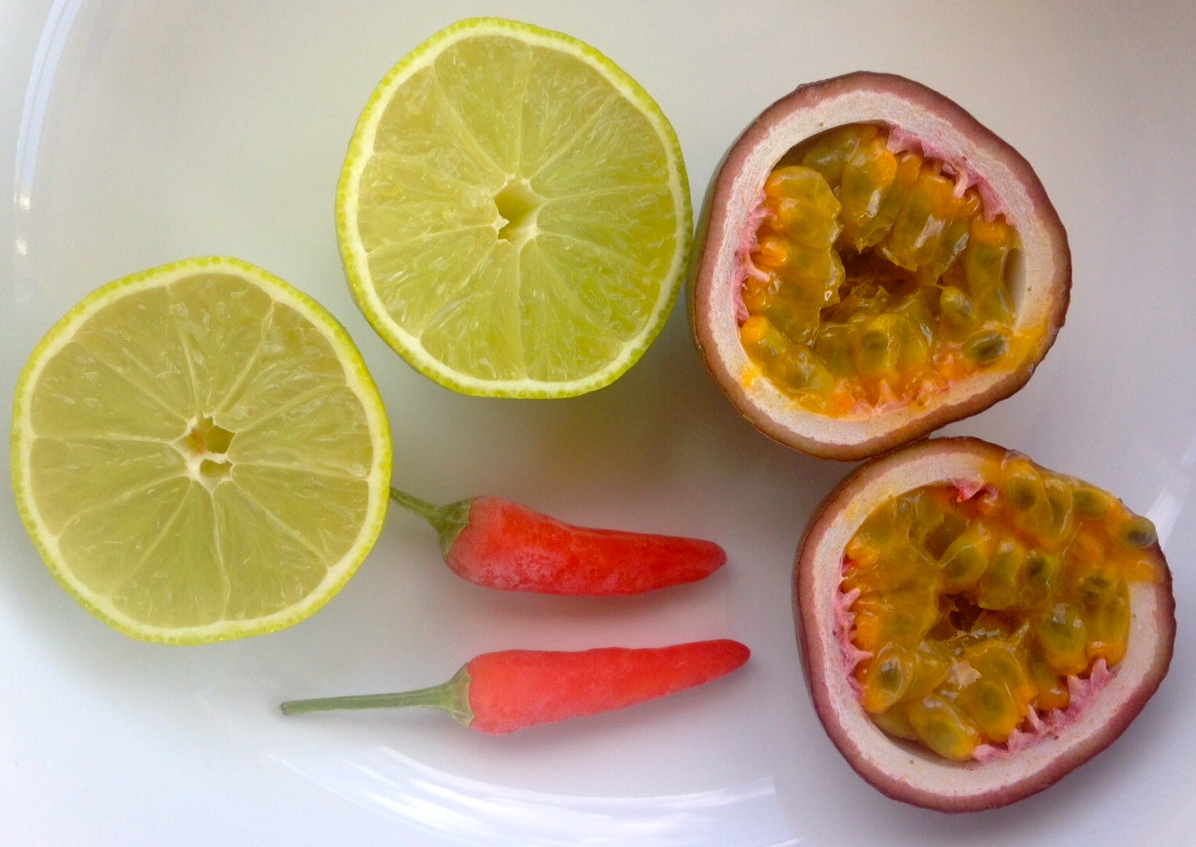
The balance of chilli heat, acid and sweetness is what makes this salsa so delicious.  However the combination can be rather fierce, so you need to make sure that you choose ripe, sweet passion fruits. The purple/brown skin should be slightly wrinkled and the fruits should feel quite heavy.

Swordfish is very dense and meaty so the steaks should be cut slightly thinner than tuna or salmon (which are also delicious with this salsa, btw).  I trim off the very dark sections of the steak, but leave the skin on as it helps to hold the steak together as you cook it.

Ingredients per person:

1 swordfish steak

1 small red chilli

1 clove garlic

Splash of olive oil.

Salsa (per serving)

The seeds and flesh of 1 ripe passion fruit

Juice of half a lime

What to do (roughly speaking) Chop the chilli very finely and fry it gently in a little olive oil. Take the pan off the heat and add the passion fruit and lime juice. Mix this all together thoroughly so that the flavours blend and the mix is slightly warm. Pour the salsa into a bowl and set aside.

At this stage, you’ll want to throw open all the windows in your kitchen and put the extractor fan on full blast.

Wipe the pan with kitchen paper, add a little more olive oil and put the pan back on the heat. Fry the chopped garlic on a high heat so that it gets slightly brown and caramelised at the edges. Place the swordfish steaks on top of the garlic in the pan and move them around slightly as they cook to stop them sticking, but don’t turn them over. Turn the heat down slightly and cook the steaks on one side only for about 5 minutes, then turn over to brown the other side for a minute.

Serve with the salsa on the side, new potatoes (Cyprus potatoes have started to arrive and they are my absolute favourite taste and texture) and green vegetables or salad. The sweetness of sugar snap peas (also just in season) goes really well with the salsa. Cook them for just a couple of minutes, if at all.

Asparagus and whistling green pea risotto.

The original was printed (yes, we even have a local printshop – Hanway) and distributed in the shops in April 2014. You can download it here: Asparagus and whistling green pea risotto Or if you can’t be bothered to download it, it’s here:

The Market Garden now has English asparagus, and peas in the pod. I bought peas last week to make this recipe but ate them all raw before I got round to it. My grandmother used to make us whistle while we were shelling peas, so I did that … and, finally, here you are.

Ingredients:

1 large onion

4 sticks of celery

4 garlic cloves

1 litre of hot stock (I like to use veggie stock, but you can use chicken) – keep this by the stove in a jug, or in a pan on a low heat.

I bunch of asparagus. Trim off and discard the very woody bit at the thick end – about 1 cm is enough. Cut the asparagus stalks in half.

2 big handfuls of peas in the pod – shell the peas while whistling. Don’t stop whistling until you have added them to the risotto

400 g risotto rice

a glass of white wine

100 g grana padano or parmesan cheese. Grana padano is less salty and a little creamier. You can get these in James Elliott.

A knob of butter.

salt and pepper

What to do. …roughly speaking:

Chop the onion, celery, garlic and the thicker halves of the asparagus very finely.

Heat a little olive oil in a large saucepan until smoking, and add the chopped veg. Stir it all around quickly for a few seconds and then turn down the heat, put a lid on the pan and sweat the veg for about 5 minutes. Take off the lid, turn up the heat a bit and add the rice. Keep stirring. Add the wine. Keep stirring. When the rice has absorbed the wine, start to add the stock – a little (about 100 ml) at a time. Wait until the rice has absorbed the liquid before you add any more. Taste the rice from time to time to see how you’re doing. When the rice is almost cooked (after about 20 minutes), cut the tender ends of the asparagus in half and add these and the raw green peas. Keep cooking until the rice is cooked (when it’s no longer gritty in the middle, its done). You may not need all the stock. Or you may need a little more.. The asparagus tips and peas should still be slightly crunchy. Turn off the heat and add the butter and most of the grated cheese – mix it all around thoroughly. Taste it and add salt and pepper if you like.

Serve immediately with a crunchy green salad.